Introduction
The question "machines vs humans" is misleading. In 2026, machines already beat humans on narrow, well-defined vision tasks at scale. Humans still beat machines on general understanding, context, and adaptation in the real world.
The real future is human plus machine systems, with strong data pipelines behind them.
If you are building computer vision systems, start with the dataset and enforce strict labeling and validation standards.
What changed since 2024
-
Multimodal systems are mainstream Vision is increasingly paired with language, reasoning, and tool use. Many products are no longer "vision-only".
-
Self-supervised and foundation model features Feature extraction and transfer are stronger. Teams can bootstrap performance faster, but only if the dataset matches the target domain.
-
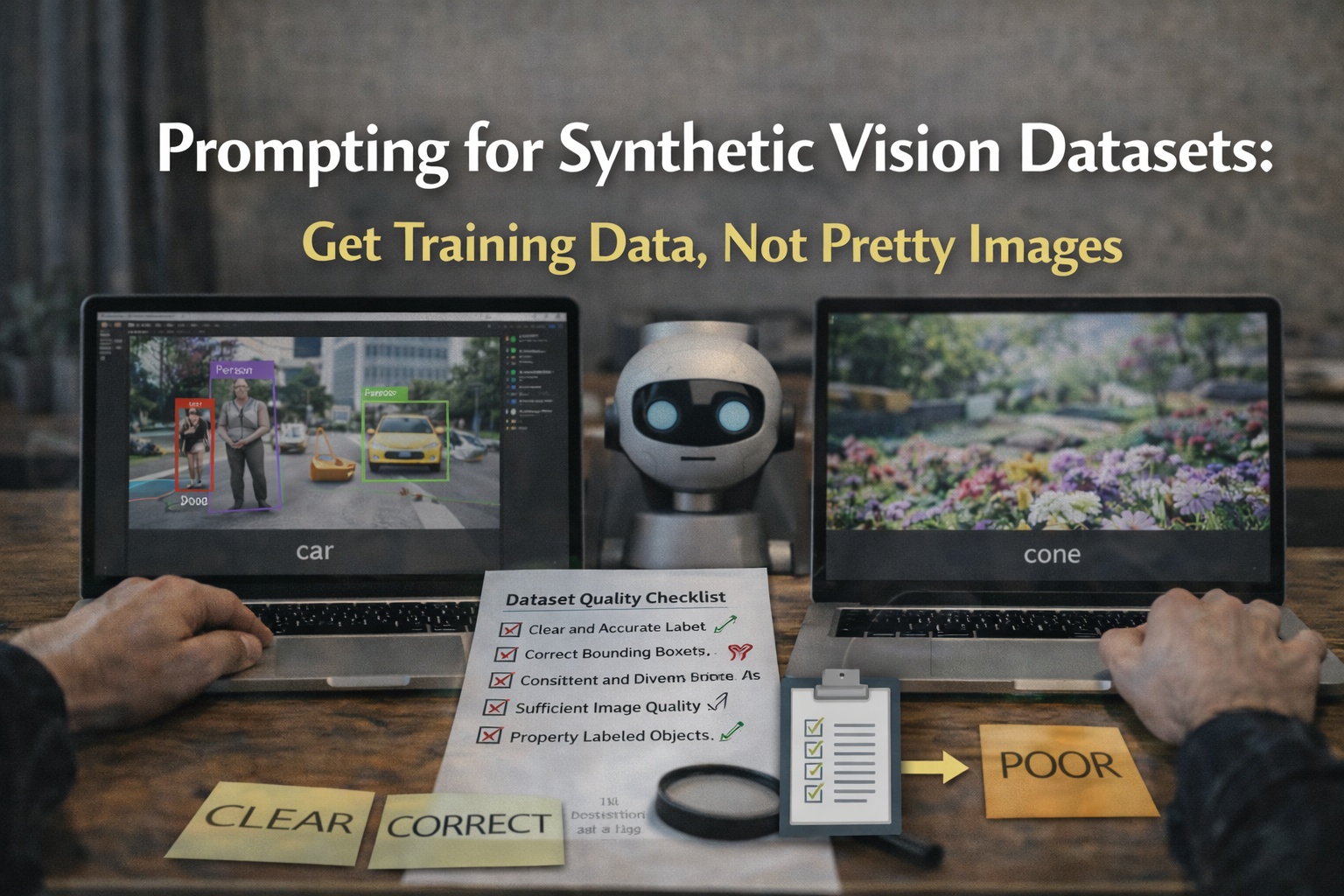
Synthetic data moved from gimmick to workflow Synthetic data is now a standard tool for coverage: rare classes, edge cases, controlled lighting, and occlusion. It still fails if it is not labelable or if it drifts from production.
How machines see (still)
Most vision systems reduce images to features using:
- convolutional backbones
- vision transformers
- detection heads (for boxes)
- segmentation heads (for masks)
The difference is not that machines "see like humans". The difference is that machines optimize measurable objectives over large datasets.
Where humans remain stronger
Humans excel at:
- reasoning from context
- understanding intent
- learning from very few examples
- adapting to novel environments without retraining
Machines struggle with:
- domain shift
- ambiguous labels
- unseen failure cases
The real bottleneck: datasets
Models keep improving. Data quality is still the bottleneck.
If you want better results:
- Define classes and edge cases like a contract.
- Validate label correctness (random audits).
- Build coverage, not just quantity.
- Prevent leakage and overfitting.
- Run fast baseline loops before scaling.
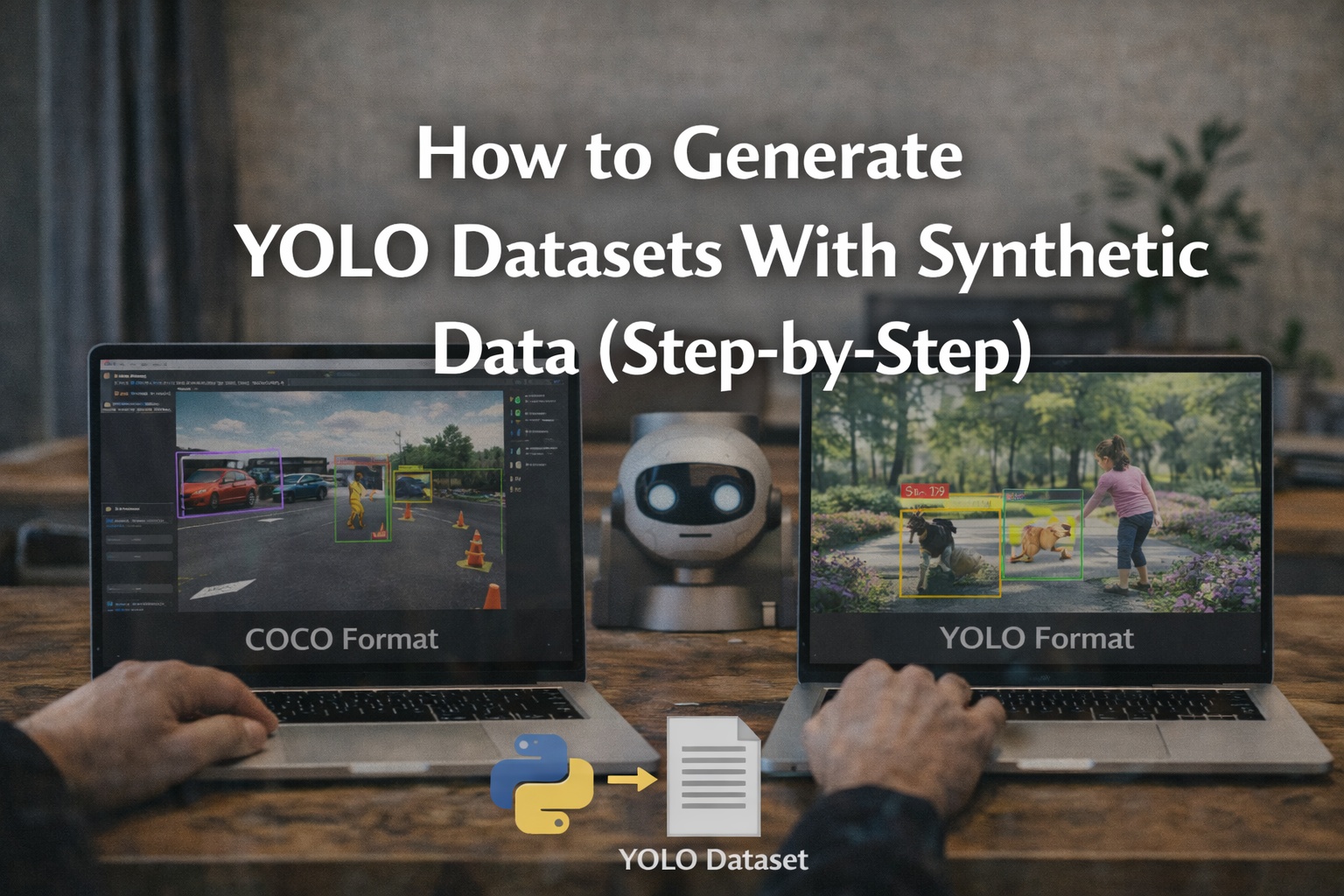
For dataset generation and exports, focus on consistent formats and quality validation.
My prediction for 2026 to 2028
- Vision becomes an input to decision-making systems, not a standalone feature.
- Evaluation gets stricter (more out-of-domain testing and safety constraints).
- Synthetic data becomes default for edge cases, but real data stays the anchor.
Machines will keep winning at narrow tasks. Humans will keep winning at general understanding. The winners are the teams that build systems that combine both.