Introduction
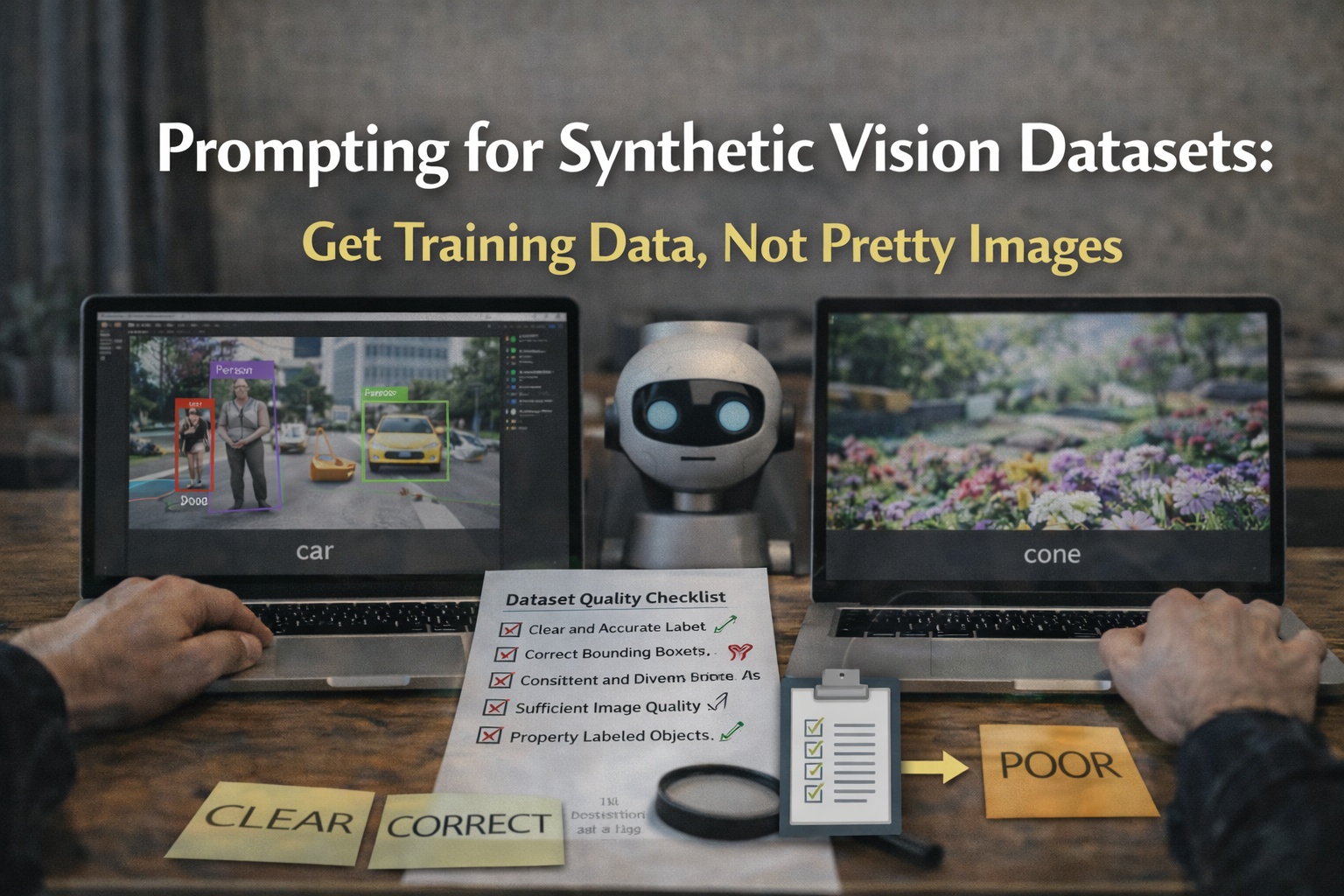
Most detection failures are dataset failures. This is a 2026 checklist to catch the problems that waste training time: label noise, unclear classes, narrow coverage, leakage, and broken exports.
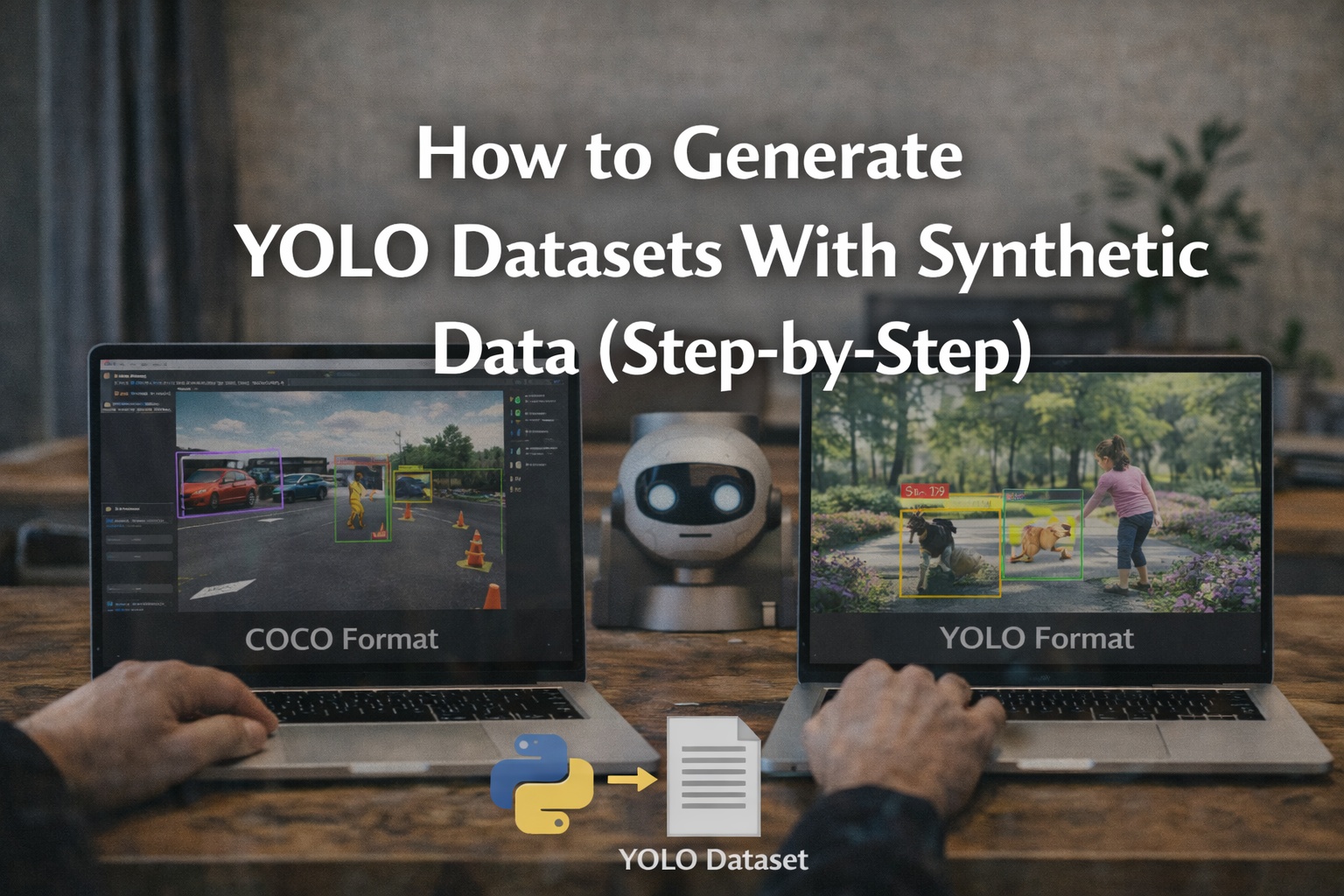
Generator for YOLO and COCO exports:
1) Label correctness (non-negotiable)
Audit 50 random images and check:
- boxes are tight and consistent
- missing boxes are rare
- wrong class assignments are near zero
If wrong labels exceed 1 to 2 percent, stop training and fix labels. More epochs will not save you.
2) Class definitions (write them like a contract)
You need:
- a one-line definition per class
- examples and counter-examples
- edge-case rules (cut-off objects, reflections, stickers, partial occlusion)
Avoid premature taxonomy. "car" vs "sedan/SUV/hatchback" is usually a mistake unless you have enough examples per subclass.
3) Coverage beats quantity
Coverage checklist:
- angles and distances
- lighting (day, night, mixed, backlit)
- backgrounds (clean and cluttered)
- occlusion levels
- motion blur, compression artifacts (if your production pipeline includes them)
500 diverse images can beat 5,000 near-duplicates.
4) Imbalance and long-tail classes
For each class:
- count instances
- count images containing it
- check size distribution (small vs large objects)
Fix options:
- targeted generation for minority classes
- oversampling minority classes
- class-aware loss and sampling
5) Leakage (the metric killer)
Leakage is when validation contains near-duplicates of training. It produces fake-good mAP.
Prevention:
- split by source (camera, location, day)
- cluster by similarity before splitting
- keep synthetic batches separated by seed groups
6) Format sanity (YOLO and COCO)
Do not trust exports without visual validation:
- render boxes and masks on top of images
- confirm class ids map correctly
- confirm coordinate ranges and normalization rules
If you cannot render annotations correctly, your training code is likely training on garbage.
7) Quick evaluation loop (before scaling)
Use a consistent baseline:
- train a small model for a few epochs
- track per-class precision and recall
- categorize failures (small objects, occlusion, low light)
If fixes do not improve the quick loop, do not scale the dataset yet.
8) Synthetic data checks (2026 reality)
Synthetic datasets fail when:
- objects look plausible but are not labelable
- scenes are too "clean" compared to production
- artifacts create shortcut learning
Use synthetic data to expand coverage, but anchor with some real images when possible.
Links
- Main generator: https://images.cv/generate-labeled-image-datasets
- YOLO generator: https://images.cv/generate-yolo-labeled-image-datasets
- Segmentation generator: https://images.cv/generate-image-segmentation-datasets
Run this checklist before you generate more images or switch models.